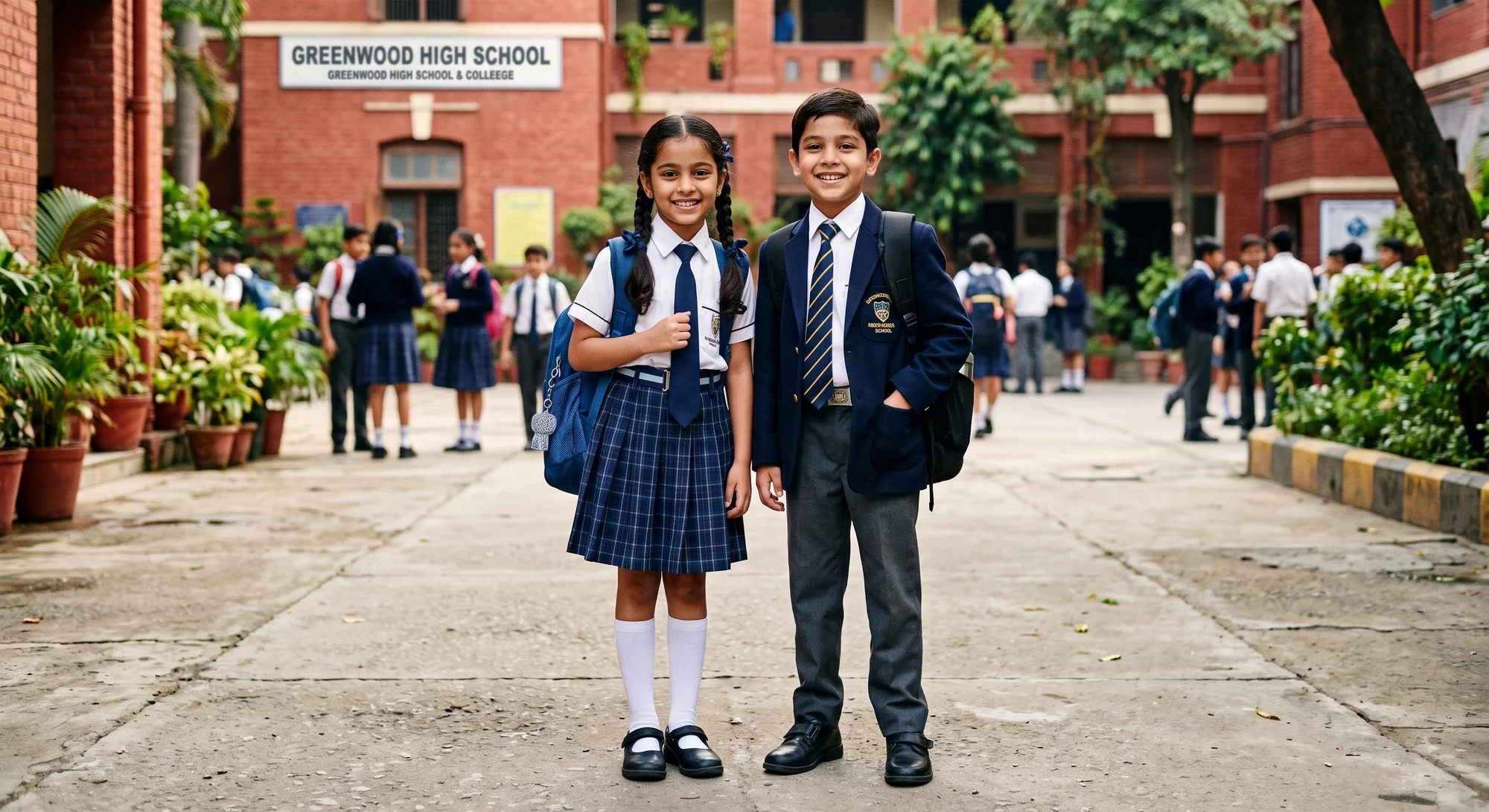
Every year around the first week of November, temperatures across Northern, Eastern, and Central India take a sharp downward turn. In places like Ranchi, Hazaribagh, Patna, Gaya, and across the Chota Nagpur plateau, early morning temperatures often fall below 10°C. Morning school assemblies become uncomfortably chilly, and parents begin asking teachers when winter uniforms will be distributed.
Unfortunately, for hundreds of school administrators and trustees, November is also the season of extreme stress. Local retailers and distant out-of-state brokers suddenly announce that blazer fabric is out of stock in the dyeing mills, sweaters are stuck in spinning units, or the consignment cannot be delivered until January. By the time the warm clothes arrive, half the winter season has already passed, leaving parents furious and children shivering in thin summer shirts.
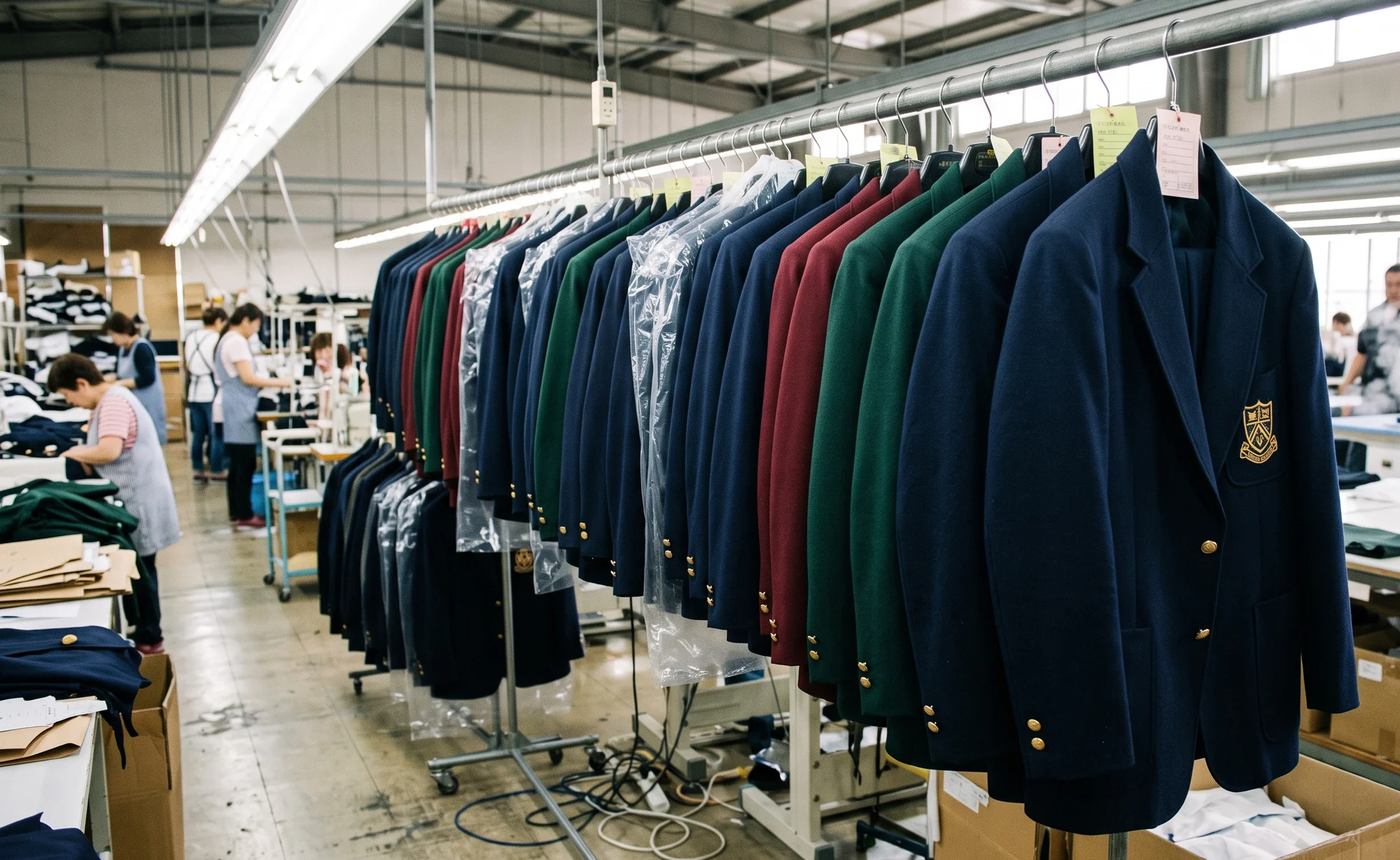
Winter uniform manufacturing requires a fundamentally different planning cycle, heavier technical fabrics, and precise multi-layer sizing patterns. As a specialized winter school uniform manufacturer in India operating out of Hazaribagh, Jharkhand, Amayra Clothing Co. partners with educational institutions to guarantee timely delivery, impeccable tailoring, and genuine thermal protection.
Why Winter Uniform Orders Demand Early Seasonal Planning
Unlike summer shirts and trousers which can be stitched rapidly from readily available poplin and twill rolls, winter garments involve complex, multi-stage production supply chains:
- Heavy Fabric Weaving Cycles: Poly-viscose suiting (260 to 300 GSM) and wool-blend coatings are woven in seasonal mill campaigns. Mills in Bhilwara, Surat, and Amritsar require four to six weeks of advance notice for custom institutional shades (such as royal navy, bottle green, deep maroon, or charcoal grey).
- Internal Canvasing and Tailoring: A formal school blazer is a structured tailored garment. It contains fused chest canvas, shoulder pads, sleeve heads, and full satin lining. Stitching a blazer requires three times the machine operations of a standard school shirt.
- Specialized Knitwear Production: Computerized flat-knit sweaters and cardigans require dedicated yarn dyeing and knitting cycles. When schools place orders in late September, spinning mills are already booked to maximum capacity.
The Golden Rule for School Trustees: Finalize winter uniform prototypes and sizing in July or August. Cut bulk production in September, and take campus delivery in October. By following this calendar, your school has zero stress when morning temperatures drop in November.
Plan Your Winter School Uniform Production Ahead of Time
Avoid mid-winter delivery panics. Amayra Clothing Co. provides structured sampling for blazers, knit cardigans, and fleece jackets with guaranteed on-time delivery dates.
Garment Category 1: Formal School Blazers
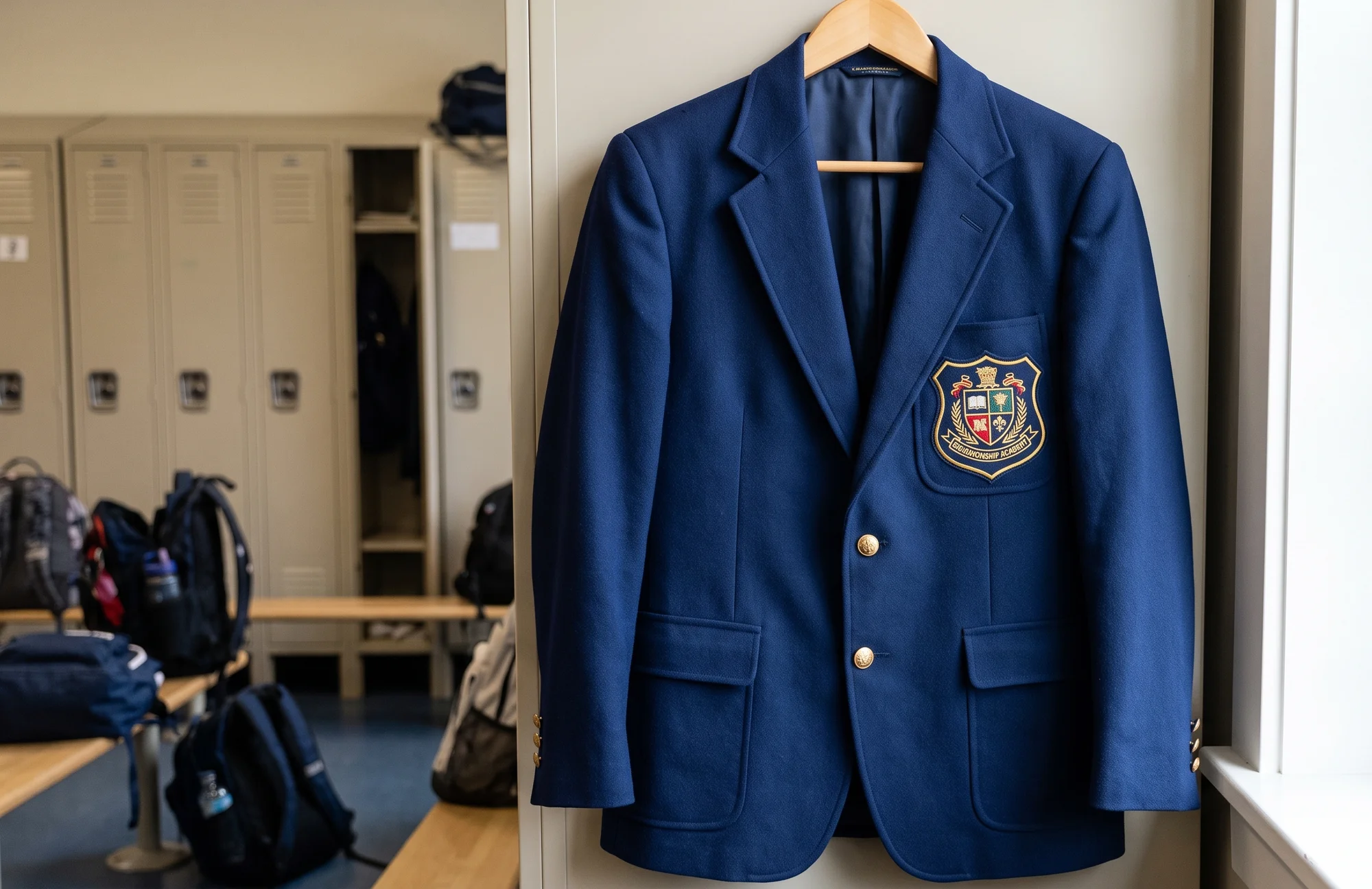
A tailored blazer is the ultimate symbol of institutional prestige. When students represent their school at debates, inter-school athletics, or annual day ceremonies, a well-fitted blazer commands respect.
Fabric Selection for School Blazers
While 100% pure wool is warm, it is prohibitively expensive for most parents, attracts moths during summer storage, and requires delicate dry cleaning. For daily Indian school wear, the ideal choice is a Poly-Viscose (PV) Heavy Suiting Blend (65% Polyester / 35% Viscose, 260 to 300 GSM) or a Poly-Wool Blend (80% Polyester / 20% Wool):
- Crease & Pilling Resistance: The polyester matrix prevents wrinkling when students sit in tight classroom desks or lean back on wooden chairs.
- Rich Aesthetic: Viscose provides a lustrous, matte wool-like hand feel that looks elegant under bright sunlight.
- Durability: Highly resistant to snags and friction tears on school bus seats and playground railings.
Internal Blazer Construction
Full Satin Lining: Ensures the jacket slides smoothly over wool sweaters or long-sleeve shirts without catching or bunching up.
Structured Shoulder Pads: Provides young students with a squared, upright, disciplined military posture.
Reinforced Trims & Pockets
Bar-Tacked Pocket Welts: Children constantly shove cold hands into side pockets. Reinforced pocket corners prevent tearing.
Crest Embroidery: High-definition crest applied as an embroidered pocket patch or woven crest badge with merrowed edges.
Garment Category 2: School Sweaters and Cardigans
For daily classroom wear, knit sweaters provide lightweight, flexible warmth. However, cheap market sweaters often lose their shape within weeks, stretching into bag-like garments with frayed cuffs.
Knitwear Specifications That Last
- Fiber Composition: High-bulk Cashmilon acrylic or Acrylic-Cotton blends. High-bulk acrylic provides the thermal insulation of wool without the scratchiness that irritates children's necks.
- Anti-Pilling Finishes: Friction between the sweater elbows and wooden desks causes cheap wool to pill (form fuzzy lint balls). We treat our yarns with anti-pilling agents to maintain a sleek, clean surface.
- Ribbed Cuffs & Waistband with Spandex / Lycra: The collar, wrist cuffs, and bottom hem must incorporate high-resilience spandex elastic threads. This ensures cuffs bounce back to their original snug shape instead of stretching out loosely after hand washing.
- Neckline Styles: Classic V-neck pullovers (allowing school ties and shirt collars to display neatly), button-down cardigans for girls, and sleeveless sweater vests for moderate autumn mornings.
Garment Category 3: Modern Fleece Jackets and Softshells
Over the past five years, many forward-thinking educational institutions across India have introduced zippered fleece jackets or bonded softshell windcheaters as an alternative or complement to traditional sweaters.
Why Principals and Parents Love Fleece Jackets
- Superior Warmth-to-Weight Ratio: Polar fleece (240 to 280 GSM) traps air in microscopic pockets, offering superior warmth without the heavy bulk of old-fashioned wool coats.
- Easy Home Maintenance: Fleece is 100% machine washable, dries in less than two hours on winter afternoons, and never requires ironing or dry cleaning.
- Modern, Sporty Look: Two-tone contrast color paneling (e.g., navy body with gold piping, or grey body with maroon sleeves) gives students a modern, athletic look.
- Heavy-Duty Nylon/Metal Zippers: We utilize premium YKK or equivalent brand-tested zippers with chin-guard fabric flaps to prevent pinching tender skin.
The Sizing Puzzle: Accommodating Multi-Layer Winter Wear
One of the most frequent errors schools make when ordering winter uniforms is using the same size measurements as summer shirts. A child who wears a Size 30 summer shirt cannot wear a Size 30 winter blazer over that shirt!
During winter, students wear multiple layers: an undershirt/vest, a thermal inner top, a full-sleeve school shirt, and frequently a sleeveless knit sweater. If the blazer does not include adequate "layering ease," the child will feel trapped, unable to lift their arms to write on the blackboard or carry their backpack.
| Garment | Recommended Sizing Allowance | Reason for Extra Ease |
|---|---|---|
| Winter School Blazer | +2.5 to +3.5 inches over body chest | Accommodates thermal innerwear, school shirt, and knit sweater underneath without pulling front buttons. |
| Knit V-Neck Sweater | +1.5 to +2.0 inches over body chest | Allows comfortable fit over a stiff poly-cotton collared shirt and tie. |
| Full-Zip Fleece Jacket | +2.0 to +3.0 inches over body chest | Provides free movement for playground sports and carrying heavy school bags. |
| Winter Trousers | Standard waist, +0.5 inch thigh ease | Accommodates thermal long johns/leggings worn under uniform trousers on cold mornings. |
Institutional Quality Control: What Trustees Must Inspect
When evaluating physical samples from your uniform manufacturing partner, check these four critical elements:
- Button Anchorage: Blazer buttons must be cross-stitched with heavy-duty bonded thread and backed with an internal anchor button (stay button). This prevents the heavy button from tearing out the shell fabric when pulled.
- Armhole Flexibility: Have a student put on the sample blazer with a sweater underneath and stretch both arms straight forward. The back seam should not strain, and the jacket sleeves should not hike past the wrist bones.
- Pocket Bag Fabric: Check the interior pocket lining of blazers and trousers. Low-grade suppliers use thin 40 GSM polyester mesh that rips the moment a child carries keys, coins, or pens. Insist on dense polycot pocketing fabric.
- Color Fastness to Winter Morning Dew: Winter air is damp with morning fog. Poorly dyed wool or acrylic will bleed onto white shirt collars when damp. Demand certified vat or disperse dyed yarns.
Why Partner with Amayra Clothing Co. for Winter School Uniforms
Located in Hazaribagh, Jharkhand, Amayra Clothing Co. operates an industrial garment manufacturing setup equipped with specialized tailoring machinery, multi-head embroidery systems, and computerized pattern plotting. We understand the specific regional climate of Eastern and Central India:
- Factory-Direct Pricing: By purchasing directly from our manufacturing line, your school eliminates layers of retail middlemen, enabling you to pass significant cost savings on to parents while maintaining luxury-grade finishes.
- Exact Pantone Color Fidelity: We ensure your winter blazers and sweaters match your school's exact pantone shades and coordinate seamlessly with your summer uniforms.
- Guaranteed Delivery Dates: We provide binding institutional delivery schedules backed by our centralized location in Jharkhand, serving Ranchi, Dhanbad, Bokaro, Jamshedpur, and surrounding districts with zero inter-state transport delays.
To learn more about our state-level manufacturing capabilities, read our guide on School Uniform Manufacturing in Jharkhand, or explore our technical advice in the School Uniform Fabric Guide.
Frequently Asked Questions
Schools must finalize winter uniform orders between July and August. Because woolen and poly-viscose blazer fabrics have longer weaving and dyeing cycles, late orders placed in October inevitably lead to delivery delays when winter sets in.
Blazers must be sized with an additional 2 to 3 inch chest allowance compared to summer shirts. This accounts for thermal innerwear and pullover sweaters worn underneath, ensuring students can move their arms freely without seam strain.
A dense Poly-Viscose (PV) suiting blend (260 to 300 GSM) or poly-wool blend with internal fusing and full satin lining provides the optimal combination of warmth, wrinkle resistance, sharp silhouette, and cost-effectiveness.
Yes, many modern schools are adopting anti-pilling polar fleece or bonded softshell jackets with contrast color panels. They are warmer than knit sweaters, machine washable, dry quickly, and do not snag or stretch out of shape.
At Amayra Clothing Co., our typical MOQ for custom embroidered blazers or color-tipped school sweaters starts from 50 to 100 pieces per design, allowing small and large institutions to source factory-direct.
Ensure Warmth, Elegance, and On-Time Winter Delivery
Discuss your school blazer, sweater, and fleece jacket requirements with our manufacturing team in Hazaribagh. We provide sample sets and institutional proposals.
See our factory and production videos on Instagram: @amayraclothingco