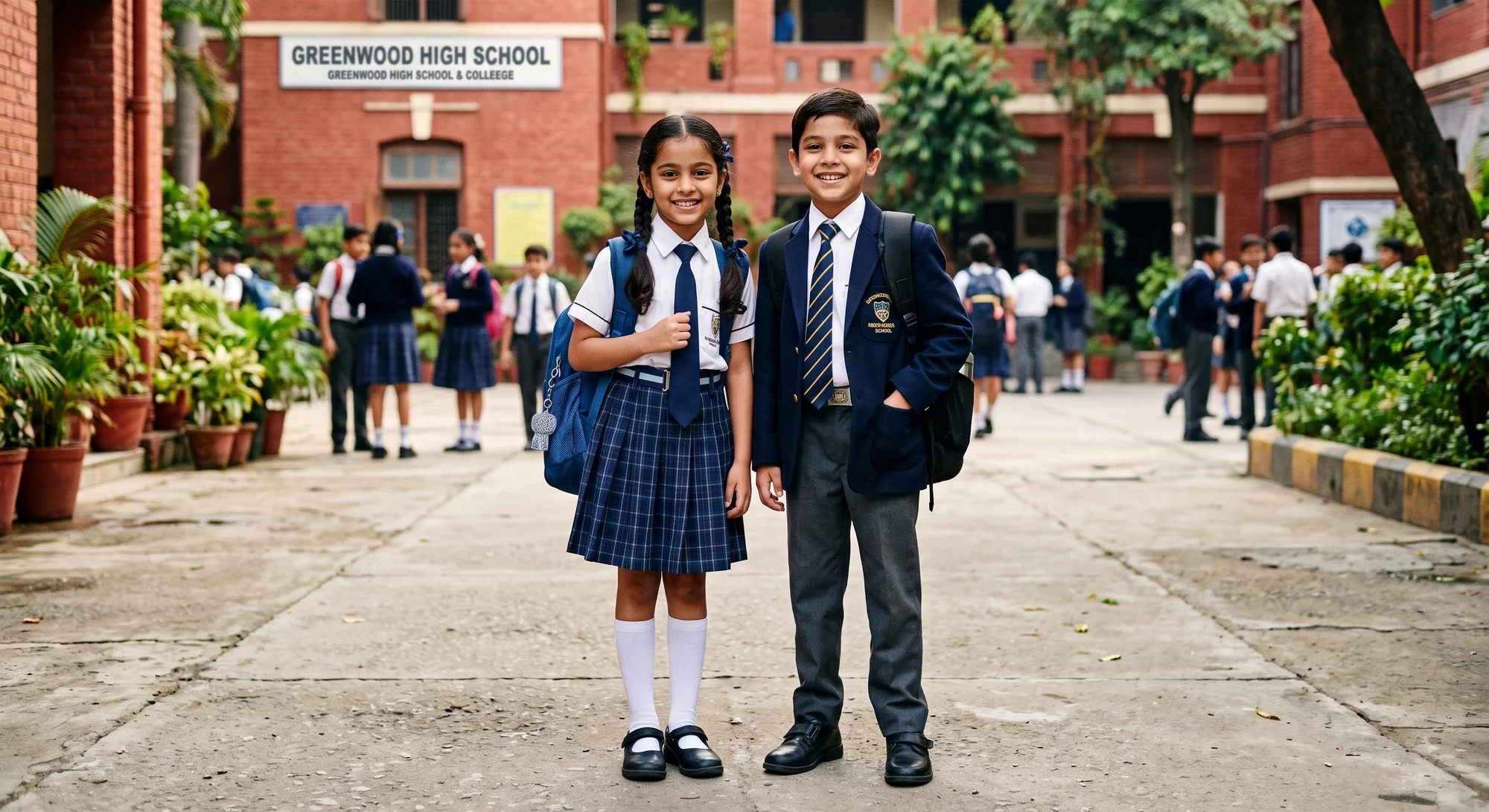
In the unpredictable world of garment retailing—where fashion trends shift overnight, seasonal unsold clothing leads to painful clearance markdowns, and consumer tastes are notoriously fickle—one segment stands out as remarkably stable, predictable, and recession-proof: school uniforms.
Every single year, millions of Indian parents must buy school uniforms. Children grow taller, knees tear on playgrounds, new kindergarten students enroll, and older students advance into senior secondary classes. School uniforms are not discretionary purchases; they are non-negotiable institutional requirements. For an ambitious entrepreneur or an established textile retailer, opening a dedicated school uniform store or securing an official school counter represents one of the most reliable retail investments in India.
However, the difference between a struggling uniform shop that gets stuck with unsold dead sizes and a thriving, highly profitable retail business comes down to one single factor: your sourcing model. In this practical B2B business guide, Amayra Clothing Co. reveals how to set up school tie-ups, structure size-wise inventory, manage working capital, and build 35% to 50% gross margins by sourcing directly from an industrial manufacturing plant.
The Economics of School Uniform Retailing: Middlemen vs Factory Direct
Before stocking your shelves, you must understand where the money goes in traditional apparel distribution. In the conventional trade, school uniforms pass through multiple hands before reaching the local retailer:
- Spinning and Weaving Mill: Produces greige yarn and fabric rolls.
- Garment Factory: Cuts, stitches, and finishes the uniform garments.
- State Wholesaler / Commission Agent (e.g., Kolkata, Surat, Delhi): Buys bulk lots and adds an 8% to 15% trading margin.
- District Distributor: Transports stock locally and adds another 12% to 18% handling margin.
- Local Retail Shop Owner: Sells to parents, squeezed between the distributor's wholesale price and parents' resistance to high prices.
Under this multi-tiered model, the retail shop owner is left with thin 15% to 20% margins while absorbing all the retail risk of odd sizes. Even worse, if you run out of Size 32 shirts in peak July admissions, the district distributor will not place an order with Kolkata for just 20 pieces.
Buying Through Wholesale Middlemen
Gross Margin: 15% – 20%
Batch Consistency: High risk of mismatched shades across seasons as traders buy from different unbranded jobbers.
Mid-Season Reorders: Impossible or subject to huge price penalties for small top-up batches.
Buying Factory-Direct (Amayra Clothing Co.)
Gross Margin: 35% – 50%
Batch Consistency: 100% lab-dip color fidelity guaranteed across repeat production cycles.
Mid-Season Reorders: Fast 10-day turnaround on small replenishment batches throughout the year.
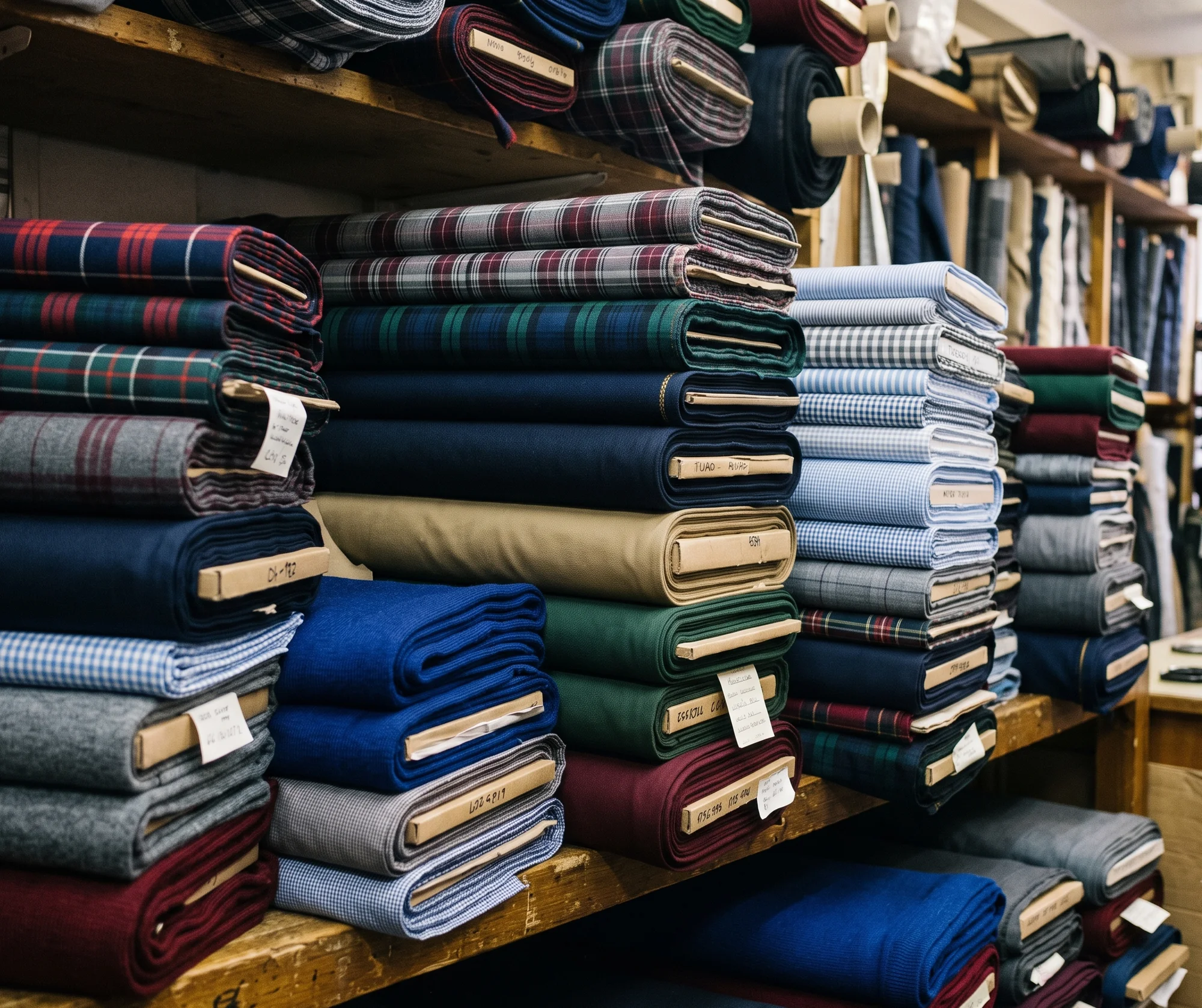
Step 1: Securing School Tie-Ups and Distribution Rights
There are two primary retail models for selling school uniforms:
- Exclusive School Tie-Up (Campus or Authorised Dealer): The school officially designates your shop as their sole uniform distributor, directing all admitted parents exclusively to your store or allowing you to run a distribution counter on campus.
- Open Market Multi-School Retailer: You stock standard uniforms for 5 to 10 prominent local schools in your town, competing on convenience, quality, and complete size availability.
How to Pitch to Principals and School Trustees
School administrators are constantly stressed by uniform issues. When pitching your shop as an official partner, do not simply offer to sell clothes. Pitch yourself as an administrative problem solver:
- Present Superior Prototypes: Bring physical sample garments manufactured by Amayra Clothing Co. Let the principal feel the mill-tested poly-cotton and poly-viscose blends and inspect the razor-sharp digitized crest embroidery.
- Offer Physical Trial Sizing Sets: Promise to provide full sizing sets for school orientation days, proving to the principal that parent exchange queues will be eliminated.
- Guarantee Year-Round Availability: Commit in writing that parents will never be turned away empty-handed during mid-year admissions in August, October, or January.
- Transparent, Fair Pricing: Because you buy factory-direct, you can offer the school higher institutional rebates or provide parents with superior quality at lower prices than competing traders.
Launch or Expand Your School Uniform Retail Business
Amayra Clothing Co. partners with retail shop owners and uniform distributors across Jharkhand, Bihar, and Pan-India. We provide custom branding, low MOQs, and factory wholesale rates.
Step 2: Mastering the Size-Wise Inventory Curve (Avoid Dead Stock)
The number one mistake that bankrupts novice uniform shop owners is ordering equal quantities of every size. If a school has 1,000 students, ordering 100 pieces of Size 22, 100 pieces of Size 24, all the way to Size 40 will lead to financial ruin.
Student body sizing follows a predictable Bell Curve (Normal Distribution). Most students fall into the central size brackets, while the smallest (nursery) and largest (Class 12) represent thin tails:
| Size Bracket (Chest / Waist) | Typical Class / Age Group | Recommended Budget Allocation | Inventory Strategy |
|---|---|---|---|
| Sizes 20 – 24 | Nursery to Class 2 (Ages 3 – 7) | 15% – 20% | Moderate stock. High initial rush during nursery admission rounds in February/March. |
| Sizes 26 – 32 (Core Zone) | Class 3 to Class 7 (Ages 8 – 13) | 50% – 55% | Maximum depth. This is your volume engine. Fastest moving sizes where parents buy 2 to 3 sets. |
| Sizes 34 – 38 | Class 8 to Class 10 (Ages 14 – 16) | 20% – 25% | Steady demand. Students experience rapid growth spurts requiring mid-year replacements. |
| Sizes 40 – 44 (Outliers) | Class 11 to Class 12 / Plus Size | 5% – 10% | Keep lean safety stock. Rely on your factory partner for fast 7-day custom made-to-measure orders. |
Step 3: Managing Seasonal Working Capital and Cash Flow
School uniform retailing has a distinct seasonal rhythm. Managing your cash flow across the year is essential to long-term success:
- January to February (Preparation & Sampling): Finalize school agreements, conduct sizing sessions, and place your primary factory production orders. Working capital is invested in inventory deposits.
- March to May (The Peak Revenue Harvest): School results are declared, admissions open, and parents flood your store. 70% of your annual revenue and cash flow is generated during these 10 intensive weeks.
- June to August (Mid-Season Top-Ups & Sports Days): Late admissions, transfers, and annual sports days create steady secondary sales for house t-shirts and PT lowers.
- September to October (Winter Inventory Buildup): Reinvest cash flow into school blazers, knit sweaters, and fleece jackets ahead of the November cold wave.
- November to December (Winter Sales Rush): High-ticket blazer and knitwear sales provide strong year-end profitability.
Step 4: Maximizing Basket Value with Institutional Add-Ons
When a parent visits your shop to buy a school shirt and trouser set, do not let them walk out the door with only those two items. In a well-managed school uniform store, cross-selling high-margin accessories increases your average bill value by 30% to 40%:
Everyday Uniform Accessories
School Ties & Belts: Custom woven jacquard ties with school monograms and high-density woven belts with embossed school buckles (Gross margins: 60%+).
Institutional Socks: Reinforced heel-and-toe cotton socks with knitted house color stripes or school initials.
Winter & Specialty Add-Ons
Thermal Inners & Leggings: Black or white inner thermals that fit cleanly under school uniforms during winter.
Sports House Gear: Wristbands, athletic headbands, and school-crested water bottles for sports days.

Why Partner with Amayra Clothing Co. as Your Wholesale Manufacturer
Whether you operate an established retail store in Ranchi, Dhanbad, Bokaro, or Jamshedpur, or you are launching your first uniform business in a tier-2 or tier-3 town across Eastern India, Amayra Clothing Co. is built to be your manufacturing backbone:
- Low Factory MOQs: We do not demand massive container-load minimums. Our dealer-friendly MOQs (starting from 50 to 100 pieces per style) allow you to start with manageable capital without getting stuck with dead stock.
- Custom Private-Label Tagging: We can sew your retail store's branded woven labels inside the collars, building your local market identity and customer loyalty.
- Dedicated Mid-Season Support: When you run out of 15 shirts or 10 blazers in August, our Hazaribagh facility produces top-ups rapidly, ensuring you never lose a sale to competitors.
- Uncompromising Quality: High-stitch-per-inch sewing, bar-tacked stress points, break-resistant buttons, and fade-resistant dyes ensure parents praise your shop for outstanding durability.
To learn more about our state-level production capabilities, explore our guide on School Uniform Manufacturing in Jharkhand, or discover our complete B2B apparel production range at Wholesale Garment Manufacturing India.
Frequently Asked Questions
Yes, school uniform retailing is one of the most recession-proof retail businesses in India. Because uniforms are mandatory and students continually outgrow their clothes, demand recurs predictably every single year with gross profit margins often reaching 35% to 50% when buying factory-direct.
A small-to-mid-size dealer tying up with 2 to 3 local schools typically requires an initial working capital of ₹3 Lakhs to ₹7 Lakhs for opening inventory, sampling, and counter setup, depending on school student strength.
Present the school management with high-quality physical garment prototypes featuring their exact crest embroidery, commit to maintaining complete size availability throughout the academic year, and offer transparent pricing backed by an industrial manufacturing partner.
Follow a normal distribution curve: allocate 60% of your budget to mid-range sizes (Sizes 28, 30, 32, 34), 25% to lower junior sizes (22 to 26), and 15% to senior sizes (36 to 42). Partner with a factory that provides rapid mid-season replenishment for fast replenishment.
City wholesale brokers add 20% to 30% commission markups, mix different dye lots leading to shade variations, and cannot guarantee mid-season top-ups when you run out of specific sizes in July or August.
Build a Profitable School Uniform Dealership Today
Partner directly with Amayra Clothing Co. in Hazaribagh. We provide wholesale factory pricing, custom branding, physical size sets, and reliable delivery schedules.
See our factory and production videos on Instagram: @amayraclothingco