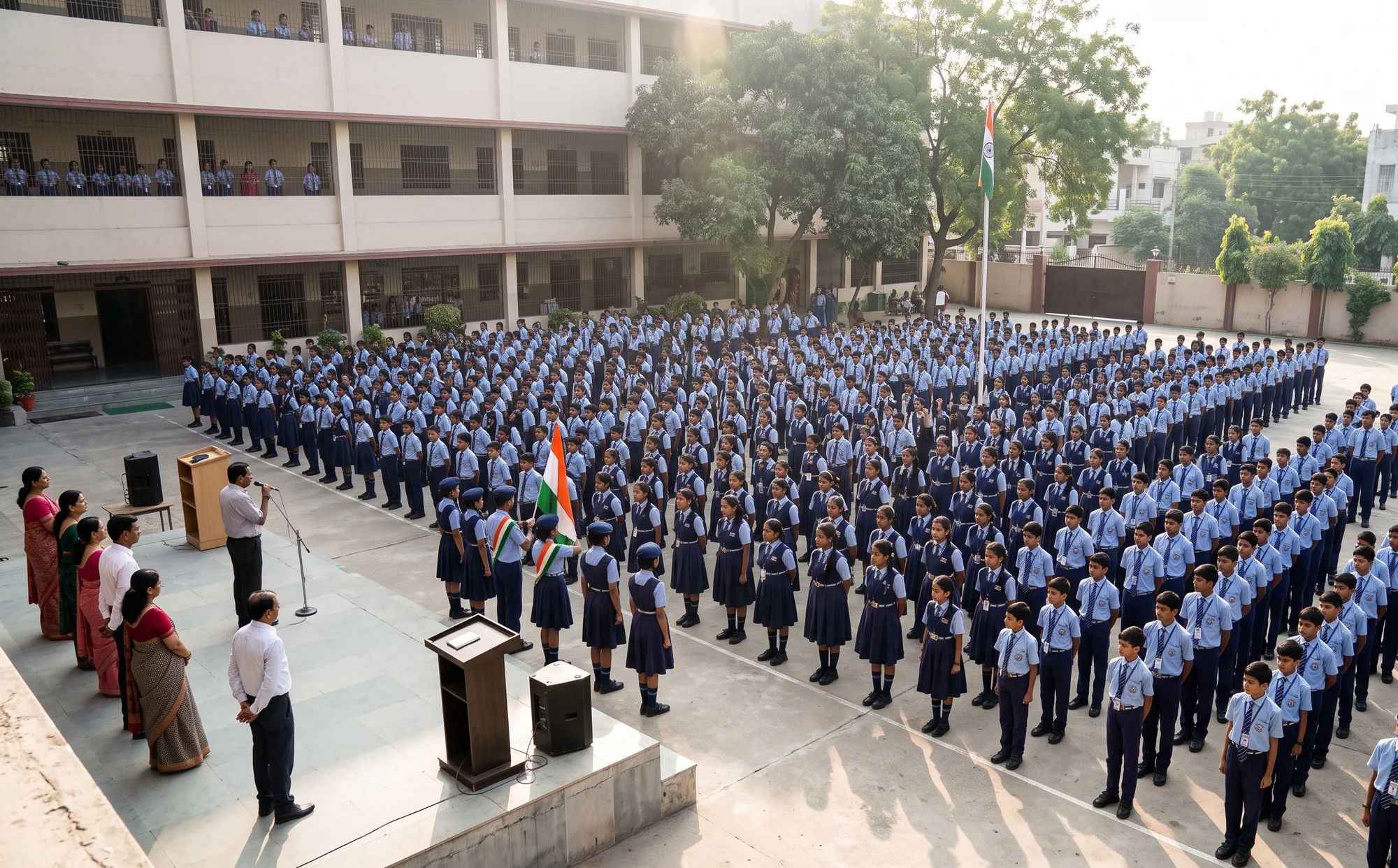
Every year between January and March, school management boards and principals across India wrestle with a difficult institutional decision: whether to stick with their existing school uniform supplier or switch to a new partner. The reasons for wanting to change are almost universal—late deliveries that stretch weeks into the new term, erratic color shades that make students look mismatched, sudden unexplained price increases, or seams splitting after two months of wear.
However, changing uniform vendors is fraught with operational risk. A school uniform is not an off-the-shelf product; it is a custom-branded institutional asset requiring synchronized dyeing, sizing, pattern engineering, embroidery digitization, and bulk distribution across hundreds or thousands of students. If the transition is mishandled, the school can end up in an even worse situation: empty uniform counters on opening day and angry parents crowding the principal's office.
As an industrial garment manufacturer based in Hazaribagh, Jharkhand, Amayra Clothing Co. has guided dozens of schools through successful supplier transitions. In this practical procurement guide, we analyze the five most damaging mistakes schools make when changing uniform suppliers and share concrete steps to ensure your next transition is smooth, cost-effective, and complaint-free.
Mistake 1: Ordering Too Late in the Academic Calendar
The most common and devastating mistake school management committees make is procrastination. Many schools wait until their annual board examinations conclude in March before inviting uniform tenders or discussing samples with new manufacturers.
The Reality of Industrial Manufacturing Timelines
When you switch suppliers, the new factory cannot simply press a button and produce your uniforms overnight. A disciplined transition requires several sequential steps:
- Yarn & Fabric Sourcing (3 to 4 Weeks): If your school has custom checks, stripes, or specific Pantone colors, the mill requires time to dye the yarns and weave the fabric rolls.
- Embroidery Digitization & Approvals (1 Week): Converting your school crest into digital stitch files and producing physical embroidery swatches for management sign-off.
- Graded Size Sets & Fitting Trials (2 Weeks): Developing physical trial garments across age brackets to ensure accurate parent ordering.
- Cutting, Stitching & Finishing (3 to 4 Weeks): High-capacity precision manufacturing, bar-tacking, buttoning, steam pressing, and quality inspection.
- Packaging & Logistical Transit (1 Week): Section-wise bundling, student labeling, and transport to school distribution centers.
If you begin this process in March for an April reopening, your new supplier is forced to take dangerous shortcuts—using cheap market stock, skipping quality inspections, or rushing stitch lines. To guarantee a flawless rollout, begin your vendor search in November or December and finalize contractual terms by January.
Planning a Uniform Supplier Transition for the New Session?
Amayra Clothing Co. provides structured transition roadmaps for educational institutions. We handle prototype sampling, lab-dips, and sizing sets with guaranteed production schedules.
Mistake 2: Falling for the "Hand-Feel" Trap (Ignoring Fabric Rub and Wash Tests)
When prospective uniform vendors present sample swatches to school trustees, they invariably showcase fabrics that feel remarkably thick, smooth, and crisp. Committee members touch the fabric, feel the crispness, and assume it represents high quality.
This is the classic "hand-feel" trap. In the textile trade, low-grade fabrics are routinely coated with chemical starch, silicone softeners, and optical brighteners to give them an artificial weight and stiffness. After two home wash cycles, the starch dissolves completely, leaving a limp, transparent, scratchy fabric that pills and tears easily.
How Schools Must Test Fabric Samples
Before approving any new supplier's fabric proposal, subject swatches to three non-negotiable stress tests:
- The 3-Cycle Boiling Wash Test: Have your administrative staff wash the sample swatch three times using ordinary Indian household detergent and warm water, followed by full outdoor sun drying. Check for shrinkage, color bleeding, and loss of body.
- The Wet Friction / Rub Test: Rub a damp white handkerchief firmly against the dyed fabric twenty times. If dye transfers to the white cloth, the fabric will stain students' skin, vests, and school car seats on hot summer afternoons.
- The Fabric Pilling Rub: Rub two swatches of the fabric together vigorously for sixty seconds. If fuzz balls or pills form on the surface, reject the material immediately. As detailed in our School Uniform Fabric Guide, insist on mill-dyed Poly-Cotton (67/33) and Poly-Viscose (PV) fabrics with proven anti-pilling finishes.
Mistake 3: Skipping Physical Size Sets (Relying on Age Charts)
Children do not grow in neat, standardized formulas. A nine-year-old child in Class 4 may have the height and shoulder width of a twelve-year-old, while another child of the same age is petite. Yet, dozens of schools switch suppliers and distribute uniforms based purely on generic "Age 8" or "Size 28" chart estimates.
The result is complete chaos on distribution day. Parents receive garments that are either absurdly oversized or constrictingly tight. School offices are overwhelmed by long queues of frustrated parents demanding exchanges, creating an atmosphere of resentment right at the start of the academic year.
The Pitfall: Generic Paper Measurements
Relying on parents to submit paper tape measurements or selecting sizes from age-based charts leads to an average exchange rate of 25% to 35%, paralyzing administrative staff.
The Solution: Physical Trial Size Sets
Demand that your new manufacturer supply a complete physical trial size set (nursery through senior secondary) for shirts, trousers, skirts, and blazers. Children try them on during orientation, ensuring 98%+ fit accuracy.

Mistake 4: Working with Commission-Heavy Middlemen Instead of Direct Factories
When searching for a new vendor, many schools simply invite bids from local uniform retail shops or regional wholesale trading agents. While working with a local middleman may feel convenient, it introduces severe operational vulnerabilities:
- Inflated Per-Piece Costs: Brokers, wholesalers, and retail agents operate on markups ranging from 25% to 40%. This either inflates the price parents must pay or forces the trader to cut corners on fabric quality and stitching thread to protect their margin.
- Zero Manufacturing Accountability: If an entire shipment arrives with crooked collars, loose buttons, or upside-down pockets, the broker has no control over the factory floor. They can only pass excuses between the school and the distant subcontractor.
- Batch Color Drift: Middlemen often source from different unbranded job-work units depending on which factory offers the cheapest rate that week. As a result, junior and senior classes receive noticeable shade variations of the same school uniform.
Partnering directly with a verified, industrial apparel manufacturing facility like Amayra Clothing Co. in Hazaribagh eliminates the broker entirely. You get transparent factory pricing, direct communication with production managers, and absolute accountability for every stitch.
Mistake 5: Overlooking the Mid-Season Replenishment Clause
A school's uniform requirement does not end on opening day. New students take admission in July, August, and September. Children experience unexpected mid-year growth spurts. Trousers tear on playground fences and need replacement.
When schools sign an agreement with a new supplier, they often focus solely on the initial bulk delivery for April, completely forgetting to negotiate terms for mid-season reorders. When the school contacts the vendor in August requesting 15 additional shirts or 10 pairs of trousers, the vendor either refuses outright (claiming their machines are set up for winter wear) or demands an exorbitant 50% surcharge for small runs.
How to Protect Your School in the Contract
Ensure your supplier agreement includes these three ironclad clauses:
- Small-Batch Replenishment Guarantee: The manufacturer must commit to fulfilling top-up orders as small as 15 to 25 pieces per style throughout the academic year.
- Price Freeze Commitment: The contracted wholesale price must remain frozen for a minimum of 12 months, preventing unexpected mid-term price hikes.
- Master Fabric Reserve: The factory should retain dedicated safety inventory of your school's specific fabric rolls in their warehouse to ensure fast 10-day turnaround on emergency top-ups.
How Amayra Clothing Co. Guarantees a Seamless Supplier Switch
At Amayra Clothing Co., we make switching uniform suppliers effortless and risk-free for school trusts and administrative boards. Our industrial facility in Hazaribagh, Jharkhand, is built around transparency, mill-certified fabrics, and precision garment engineering:
- Free Initial Prototyping: Send us a single set of your existing school uniform. We will produce a side-by-side prototype matching your exact colors while demonstrating superior stitching density, reinforced seams, and durable collar fusing.
- Complete Sizing Master Sets: We supply durable, tagged physical sizing sets for student measurement camps, virtually eliminating parent exchange requests.
- Direct Factory Pricing: By manufacturing in-house in Jharkhand, we eliminate inter-state freight delays and broker commissions, delivering premium school apparel at highly competitive rates.
For more technical details on garment construction, explore our guide on Uniform Logo Embroidery vs Screen Printing or review our comprehensive guide to School Uniform Manufacturing Across India.
Frequently Asked Questions
Waiting too late in the academic calendar to initiate procurement. Changing vendors requires fabric lab-dips, embroidery digitization, and physical size set trials, which must begin at least three to four months before the new session begins.
Many cheap fabrics feel thick and smooth initially because of chemical starch finishes. After just two home washings, the starch washes away, exposing flimsy threads, severe color fading, and heavy pilling.
Physical trial garments allow students to try on exact sizes before bulk production starts. This eliminates guessing based on age charts or generic collar sizes, virtually eliminating size returns on distribution day.
Schools must include a guaranteed mid-season replenishment clause in their supply contract with small batch minimums (e.g., 10 to 20 pieces) at identical per-piece pricing.
A direct garment manufacturing factory provides transparency on fabric origins, lower per-piece pricing by eliminating middleman commissions, exact dye batch matching, and complete accountability for stitching defects.
Ready to Transition to a Reliable Uniform Manufacturer?
Discuss your school's uniform upgrade with Amayra Clothing Co. We provide free prototype sampling, lab-tested fabric swatches, and dedicated institutional support.
See our factory and production videos on Instagram: @amayraclothingco